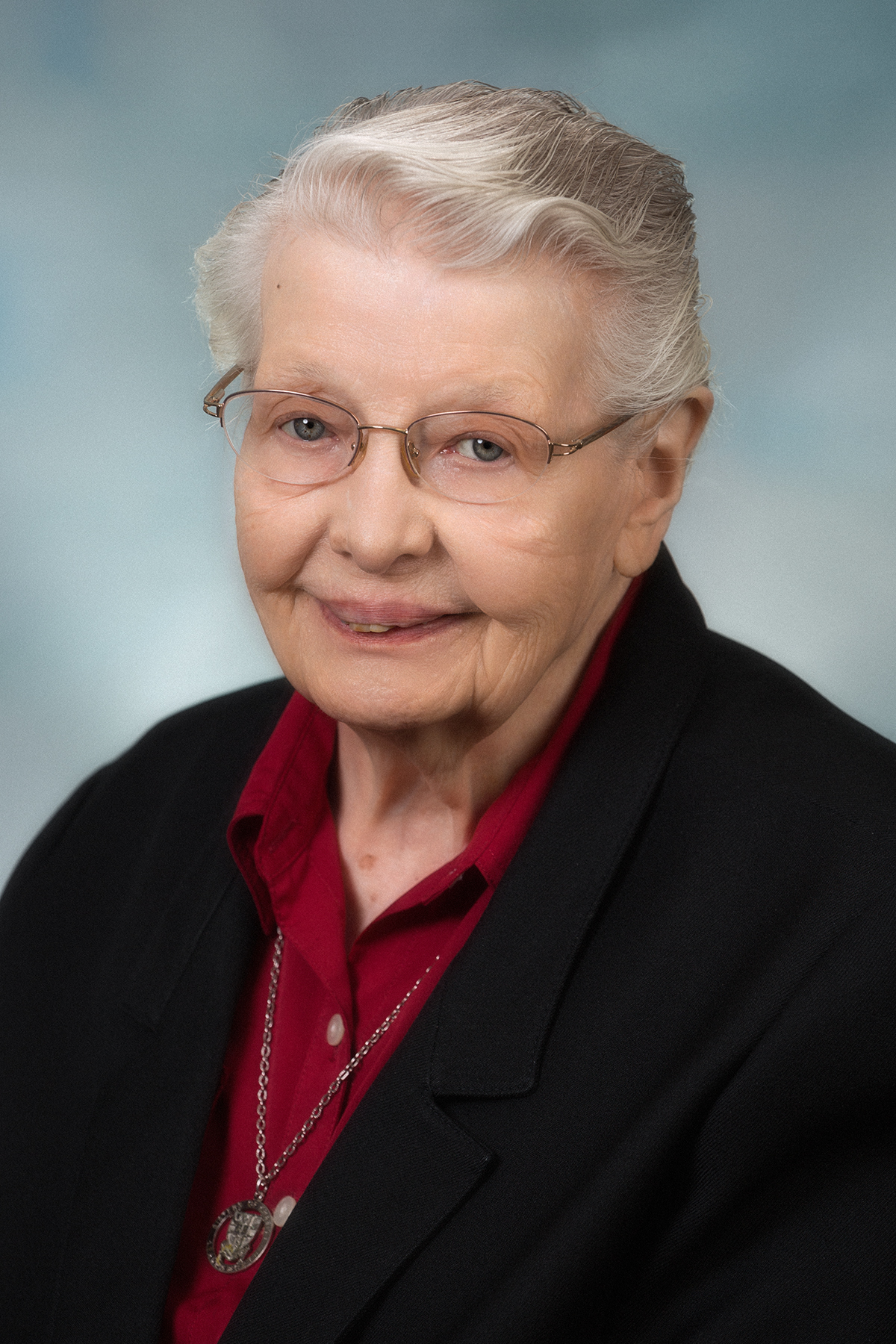
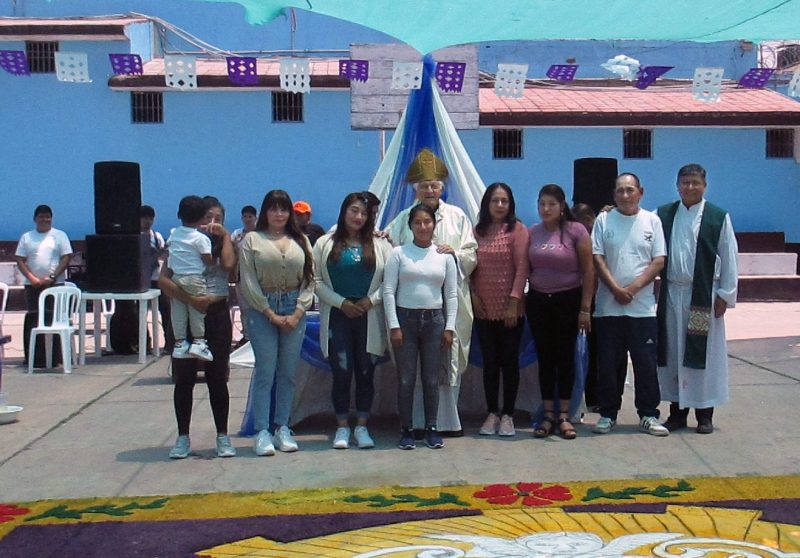
the prisons of Ayacucho, Peru, Sister Julia Huiman Ipanaqúe has dedicated decades of her life to serving those behind bars, bringing light into places often forgotten by society.
Called by the Gospel
Sister Julia’s journey into prison ministry began nearly three decades ago, rooted in her faith and the biblical call to service.
“I believe what led me to work in prisons is to live the Gospel: ‘For I was hungry and you gave me to eat, I was thirsty, and you gave me to drink, I was a stranger, and you welcomed me, I was naked, and you clothed me, I was sick, and you visited me, I was in prison and you came to see me,’” she explains, quoting Matthew 25:35-36.
Her prison ministry work began around 1992 when she was in the early stages of joining the Sisters of Charity of Leavenworth. She started by accompanying the Sisters in biblical workshops and in the chocolatadas they took from the parish of St. Rose to the prison in Piura. “Chocolatadas” is a hot chocolate party—a Christmas tradition in Peru.
Today, her ministry includes a men’s prison in Huamanga and a women’s prison in Huanta.
A Ministry of Presence
What does a typical day look like for Sister Julia? Her routine begins early, entering the prison at 9:00 a.m. alongside a priest, Father David, and two pastoral ministers, passing through security checks to reach the chapel by 9:30 or 9:45.
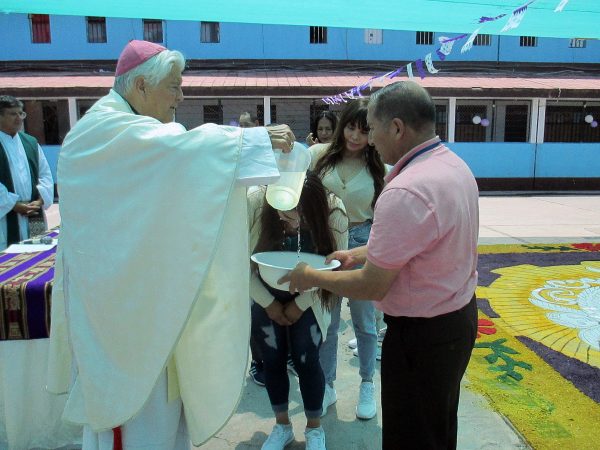
“We begin to clean the chapel and prepare everything for the celebration of Mass while they let the male inmates out of their wards to come to the chapel,” she shares. The morning includes reconciliation services led by Father David, the chaplain, while Sister Julia and others prepare for Mass.
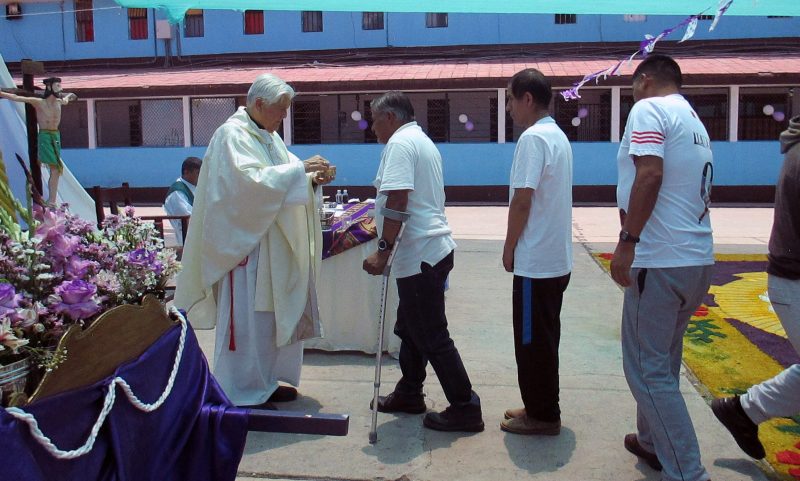
The celebration itself is a community affair with an entrance procession and active participation of all, with lectors, choir, and offertory procession. Following Mass, the inmates return to their wards around noon, while the pastoral team remains for lunch and afternoon services with the women, typically concluding their day around 5:00 p.m.
Recent changes have affected their schedule. “At the end of November, the women were moved from Huamanga to the Huanta prison, which is one hour away,” Sister Julia notes. “So, we are currently visiting and celebrating Mass with the women on Saturday afternoons in Huanta and with the men on Sunday mornings in Huamanga.”
Challenges and Hopes
When asked about the challenges inmates face, Sister Julia doesn’t hesitate to name them: “Corruption, overcrowding, lack of medical care, and necessary medicines.” Perhaps most devastating is “the abandonment of some by their closest family members.”
To address this challenge, she and her colleagues are working on “the creation of the San Vicente de Paul Shelter, which, thanks to God and the generosity of many people, will soon be operational.” This space will provide “workshops with psychological help to strengthen the inmate’s relationship with his or her family, legal advice, and pediatric care for children of the inmates, among other services.”
Transformations Behind Bars
The transformations she witnesses are among the most powerful aspects of Sister Julia’s ministry. She shares the story of one inmate who had suffered since childhood, who had been through a rehabilitation center and multiple prisons before arriving at Yanamilla-Huamanga.
“When he arrived at the prison, he did not want to know anything about faith experience,” she recalls. “Little by little, he began to participate on Sundays and in pastoral activities, and even though he has had many difficulties inside the prison, today he is the coordinator of his ward to encourage others to participate in pastoral activities.” Now, he shows “tranquility and hope for his release from prison,” and repeatedly affirms, “No way I’ll go back to prison.”
Another story involves “a foreign inmate” who arrived in early 2022 in a “terrible” emotional state, unable to stop crying. Through personal accompaniment, this woman found peace. “In October 2024, she received the Sacrament of Confirmation and is currently very faithful to the celebration of the Holy Mass and pastoral activities, grateful for our pastoral work.”
Faith as a Foundation
Sister Julia’s approach to ministry includes “spiritual formation workshops, adequate preparation for the sacraments, personal spiritual accompaniment—whenever they ask me or the priest—schools of forgiveness and reconciliation, and emotional workshops with professionals in psychology.”
She sees her work as fundamentally connected to her religious charism: “Prison ministry is a very Vincentian ministry, going to the poorest and most forgotten by our society and authorities, keeping in mind and recognizing the presence of God in them regardless of the offense committed.”
The role of faith in transformation is central to her understanding of the work. “I believe that if they voluntarily participate in our activities and celebrations, it is because they are moved by faith in our Lord Jesus that encourages them to hope for something different and better in their conversion process.”
Personal Growth Through Service
This ministry has also transformed Sister Julia. She has learned “to listen and understand with compassion and empathy, from the heart, to the situation, experience, and history of each and every one without judging, to be able to accompany with a clean look without prejudice, which is what the Lord invites me to do, to recognize Him in each brother and sister.”
Supporting Reintegration
Sister Julia concludes with the importance of prison ministry: “The prison ministry is important and very valuable, not only for the people deprived of their freedom but for all our community, because if we help in this process of change and reinsertion into society, we will have fewer people in the prisons, fewer people generating violence in our streets, and we will help to have more people who contribute to the development of our country.”
From her faith perspective, she reminds us that inmates “are our brothers and sisters, with a minor or major fault, but they are still our brothers and sisters created in the image and likeness of God, our Father.”
Through her time in this ministry