
Composting Action on the SCL Campus
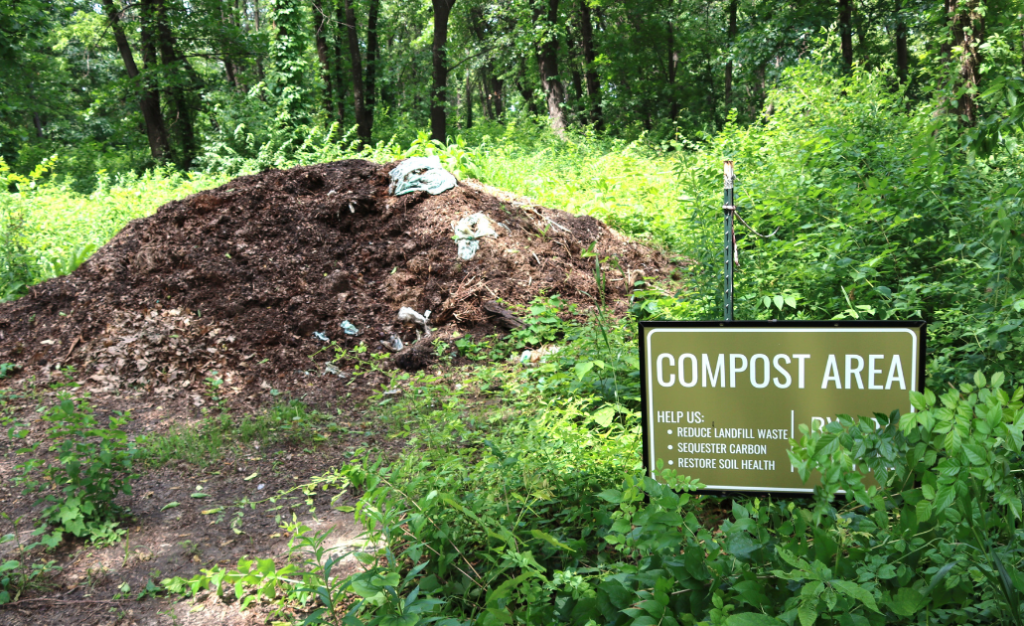
On the Sisters of Charity of Leavenworth campus, a composting pilot program diverts organic material from landfills every month.
No One Dies Alone: A Ministry of Presence
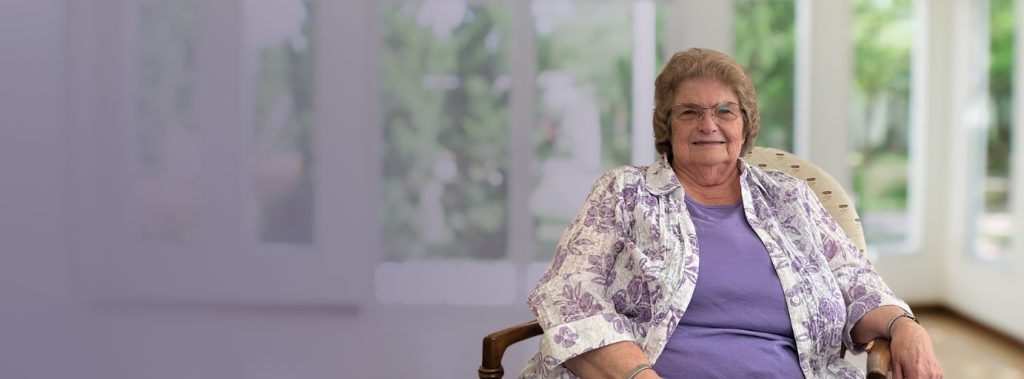
Sister Virginia Jakobe, SCL, believes her work is “a gift God gave me.” For decades, she has sat beside hospital beds in Livingston, Montana, ensuring that patients do not die alone. Sometimes she holds their hand. Sometimes she simply sits quietly. Her nursing background helps her explain what is happening to worried families when doctors and hospice workers cannot be there. In retirement, her ministry is spent accompanying people through their final hours. Sister Virginia’s path to this calling began with loss and a dream deferred. She says, although she spent 20 years teaching school, “I’d always wanted to be a nurse.” When her mother died of cancer, the experience gave her the push to ask the SCL leadership for permission to change careers. She graduated from nursing school in November 1983 and found her way to Livingston, where she has lived and served the community for over 40 years. The move to Livingston connected her nursing skills with end-of-life care in unexpected ways. While waiting to start nursing school, she had volunteered with hospice in Billings. When Livingston’s hospital began developing its hospice program, it needed evening shift nurses, and Sister Virginia was ready. As the only Catholic Sister in town, she quickly became known throughout the community. Even before formal training, Sister Virginia found herself staying overtime to sit with dying patients. “I would stay overtime and sit with patients who were dying and help the families,” she explains. After the hospital built a new facility in 2015, she took classes in “No One Dies Alone,” which trains volunteers to ensure no patient dies without someone present. But by then, she had already been doing this work for years. Her approach to accompaniment adapts to each person and situation. “I respect their religion and their practices,” she says. With patients, “if they want to sing or pray or talk, then we do that. If they’re unable or they don’t want to, I just sit quietly with them and I do the internal praying.” Her training taught her about different faith traditions so she can offer appropriate comfort. Through years of this ministry, Sister Virginia has learned that dying follows no set pattern. “Everybody dies differently,” she emphasizes. “Everybody has their own way of going through the dying process.” She has observed that patients often control the timing of their death, sometimes waiting to die until family arrives or dying once loved ones leave the room.Her own family experiences taught her about this timing. When her mother was dying, her father had been at her bedside for months but had stepped out of the room. When they called him back, “she was alive for just seconds and then she passed away.” These moments show her that “it’s their decision” when to let go. Sister Virginia has also witnessed what she describes as spiritual struggle during dying. Some patients become restless and agitated as death approaches. She believes her presence during these moments can “help them know that there is somebody around them who cares for them.” The emotional weight of this work requires intentional self-care. Sister Virginia takes “quiet time” to think about each experience. She asks herself, “could I do something better or not do something at all?” Prayer, country drives, and walks help her process what she has witnessed. This ministry has made her “a deeper religious person” with “a deeper prayer life.” Her accompaniment work has changed how she sees daily interactions. She also ministers as a greeter at the hospital, where she has learned that small gestures matter greatly. “You never know what little thing you’re going to do to help somebody,” she reflects. When she simply says hello to someone, “the gratitude on their face comes back to me. So it works both ways.”This insight shapes her approach to everyone she meets. “It’s just the little things rather than great big things that help,” she says. The work has made her “much more aware of the individuality of people” and taught her “not to judge others.” Her greatest wish is that others would understand this individuality when it comes to death. Sister Virginia has observed that each death is unique. Her ministry gives the assurance that people do not have to die alone. Through her presence, Sister Virginia helps make the dying process less frightening for both patients and their families. This article appeared in the 2025 Summer edition of Voices of Charity
On Pope Francis and His Journey to Take the Church to the Peripheries
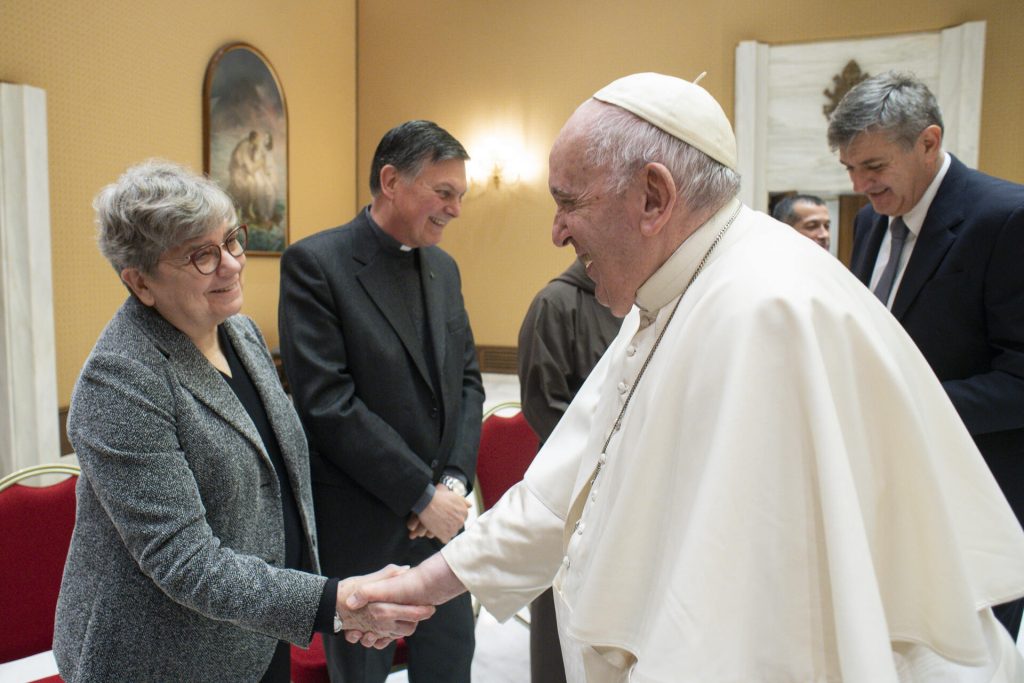
The changes effected by Pope Francis marked a new stage in the reception of the vision and reforms of Vatican II in the Church’s turn from ecclesio-centrism to its missionary journey to the peripheries of the world to announce the message of God’s saving mercy.
Ministry of Prayer and Presence

Sister Katherine Mary Westhues Sister Katherine Mary Westhues reflects that her early prayer and faith life were shaped by her father’s faith. “God was always near him. It was a normal part of life,” she says. Her family practiced daily prayer through the rosary, meal blessings, and weekly Sunday Mass. Sister Katherine Mary’s spiritual journey led her to religious life. “I felt the reason I came to religious life was for God. Teaching was secondary. God was my first reason, and if I didn’t have a relationship with him, the rest of it wouldn’t be any good,” she explains. The Blessed Sacrament has been central to her spiritual life throughout her years of service. In her current prayer ministry, she treasures daily Mass attendance and expresses gratitude for this blessing each night. Rather than focusing on specific prayer intentions, Sister Katherine Mary prefers to praise God and surrender outcomes to divine wisdom, acknowledging the overwhelming number of worthy causes in today’s troubled world. Sister Mary Geraldine Yelich Sister Mary Geraldine Yelich says that people look forward to prayers from the Sisters, which makes her take their requests very seriously. She says her primary mission these days is to pray and be present for others. This understanding of prayer took a considerable amount of time to develop. Sister Mary Geraldine says she didn’t have the advantage of Catholic schooling, and her parents weren’t particularly religious. Despite this, her mother always ensured that her children attended religious education classes taught by the Sisters during the summertime. These days, Sister Mary Geraldine finds joy in the many opportunities at the Mother House and Ross Hall to nourish her prayer life. She feels blessed that Father Dennis Schaab, C.PP.S., is on campus and can say Mass every day for the SCL Community. Most of all, Sister Mary Geraldine thinks, “We can be nourished every day with the Eucharist. And I think that should bring the most joy that we can receive Jesus every day.” This article appeared in the 2025 Summer Edition of Voices of Charity.
A Synodal Chruch: The Christian Faithful on Pilgrimage

This article appeared in the Summer 2025 Issue of Voices of Charity. Picture a parish pastoral council where everyone’s voice matters—the single mother worried about childcare, the overlooked elderly parishioner, the teenager with fresh ideas. This vision can become reality through synodality. Sister Susan Wood, Sister of Charity and professor of systemic theology at the Regis St. Michael’s Faculty of Theology at the University of Toronto, explores the theological foundations of synodality in her new book A Synodal Church: The Christian Faithful on Pilgrimage (2025). She argues that synodality represents a fundamental way of being Church—rooted in baptism and the Second Vatican Council’s vision of the Church as a pilgrim community. Rather than surface consultation, she calls for real transformation through communal discernment that empowers both clergy and laypeople to embrace diversity, dialogue across differences, and discern God’s will together. More Than Meetings“Synodality is not a chapter in an ecclesiology textbook,” Sister Susan writes. “It is an expression of the Church’s nature, her form, style, and mission.” She connects it directly to baptism: “Baptism sacramentally enacts the journey of a synodal church…. All of Christian life is properly baptismal.” This challenges how Catholics see themselves. Sister Susan reminds us: “There is no such thing as laity in the Church, only Christians, some ordained, all missionary disciples.” Historically, she notes, “The earliest use of the threefold title ‘priest, prophet, and king’ applied first to Christ, then to the church as a whole for the first twelve hundred years.” All baptized Christians share in Christ’s mission as primary participants. From Theory to PracticeSister Susan clarifies the practice of inclusive participation in the church: “Full, conscious, active participation is not a democratic, but a liturgical principle.” True synodality means listening for how the Spirit moves through the community’s lived faith experience. It involves what the Church calls sensus fidelium—the sense of the faithful. As Sister Susan explains, “The emphasis is on a lived integration of teaching, not merely a notional agreement… whether the teaching has transformative power within a faith community.” Small steps matter: restructuring meetings so quiet voices are heard; asking “What is God calling us to do?” instead of “What do we want?”; a parish pastoral council understanding why families leave, rather than lamenting declining attendance, practices synodality. Addressing Real ObstaclesSister Susan acknowledges genuine barriers: disconnection between clergy and laypeople, distrust from past wounds, and clericalism. Synodality addresses each by emphasizing shared baptismal identity, building trust through patient listening, and emphasizing hierarch as service. “Discernment in common has the potential of being a transformative ecclesial practice,” she writes. Real change becomes possible when communities commit to this process. Discerning TogetherLiving synodality begins with intentional choices: Sister Susan’s message is, “The future of the Church depends on all of us—walking, listening, and discerning together.” This means rediscovering what the Church has always been called to be: a community of missionary disciples walking together, guided by the same Spirit.
Golden Jubilee: a Celebration of Charity

My calling to this Community has been among my greatest gifts. What a blessing it has been to be in the company of the Sisters for these 50 years!
Prison Ministry in Peru: A Journey of Faith and Compassion
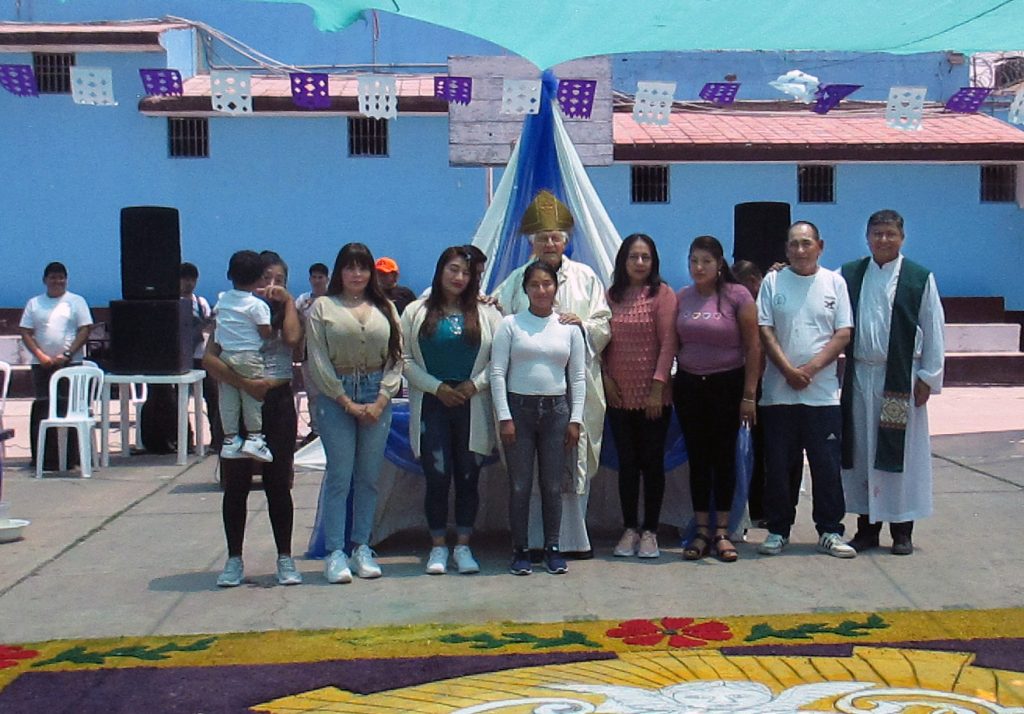
Sister Julia Huiman Ipanaqúe has dedicated decades of her life to serving those behind bars in the prisons of Ayacucho, Peru.
by society.
DePaul Leavenworth Update: Summary from June 19 Presentation
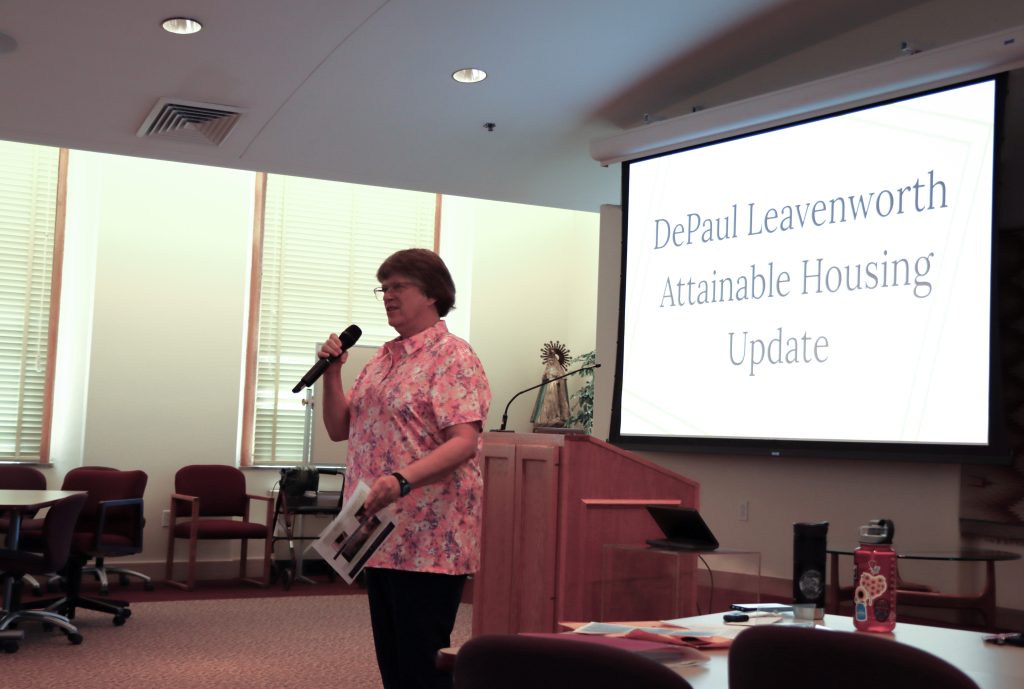
Sister Amy Willcott provided an update on DePaul Leavenworth Attainable Housing during her recent presentation. For those who could not attend, here are the key developments in this ministry that began with the work of the Leavenworth Interfaith Community of Hope in 2021. Current Operations The program has grown from one donated house to 19 houses, mostly located in North Leavenworth above Spruce Street. They currently serve residents ranging from one month old to 75 years, including 18 children across 16 houses and six single mothers with children. Only one house still requires renovation, with two recently completed homes ready for new families. What sets their approach apart is the weekly home visits by Chris Leach, their housing support specialist. These meetings focus on goal setting, progress review, and connecting residents with available resources. Chris brings lived experience to his role, having navigated homelessness, addiction, and mental health challenges before finding stability through veteran services. Program Structure Residents must have a minimum monthly income of $900 and contribute 30% toward rent, with utilities included. The program eliminates security deposits and utility deposits—barriers that often prevent people from accessing housing. This structure ensures individuals on SSI can qualify, as their benefits exceed the minimum requirement. Sister Amy emphasized something meaningful that Chris shared: many residents are doing the right things, working, staying clean, keeping appointments, but cannot access housing because they don’t score highest on traditional waiting lists. The program serves as a safety net for these individuals. Growth and Development DePaul Leavenworth has received a million-dollar federal grant to build four duplexes, adding eight housing units. One will be constructed next to their existing duplex on Potawatomi. Sister Amy requested our prayers that this funding comes through as promised, though they are committed to purchasing the four lots regardless of final grant approval. The program is also relocating from the Lutheran Church (where it has operated rent-free) to the former Storms Pharmacy building at 7th and Ottawa. They will lease this space from the Lutheran Church for $1 per year over a five-year period. The space will serve as both office and community gathering area, complete with the original soda fountain counter and plans for seating areas and kitchen facilities. Outcomes and Impact Over the course of four years, the program has required eviction in only two of 19 housing placements, achieving a 90% retention rate that reflects its approach of providing support alongside housing, rather than housing alone. Sister Amy shared data that Chris uses in advocacy work: homelessness costs taxpayers approximately $35,000 per person annually when factoring in police services, emergency healthcare, and other interventions. Housing and supporting someone costs roughly $12,000 per year. Organizational Connections As part of DePaul USA, Sister Amy reports monthly to the chief operating officer and participates in calls with directors from 12 cities nationwide. She appreciates the administrative support, particularly having back-office financial work handled in St. Louis and Chicago. There are also connections to our broader SCL family: the Sisters of Charity of New York partner with DePaul’s college program, housing homeless students in unused sections of their mother house on the Hudson. Philosophy and Approach Chris’s presentation, which we viewed during the meeting, emphasized that homelessness stems primarily from a lack of affordable housing rather than personal choice. The program serves both individuals transitioning from shelter and those at risk of homelessness who need intervention before reaching crisis. His words capture the heart of their work: “It takes a community, and it takes a circle of support. Nobody wants to live in homelessness. We all want a way out.” Advocacy and Prevention Beyond direct service, the program engages in advocacy through the Kansas Housing Advocacy Network, sharing data with state and federal legislators. They also focus on prevention, helping people who are “one disaster away” from homelessness before they reach crisis. The weekly home visits allow for both practical support—budgeting assistance, connection to resources—and relationship building. Some residents have successfully transitioned to independent living, while others contribute to community services through their employment. Moving Forward Sister Amy concluded by asking for continued prayers, particularly for Chris’s health and longevity in this work, given his central role in the program’s success. The new community space is set to open next week, and construction on additional housing is contingent upon final grant confirmation. This ministry continues to embody our charism, demonstrating that with appropriate support, stable housing transforms lives. The work proceeds one house, one relationship, one life at a time. Sisters interested in visiting the new location or learning more about volunteer opportunities may contact Sister Amy directly.
Lives Touched by San Vicente Pastoral Center
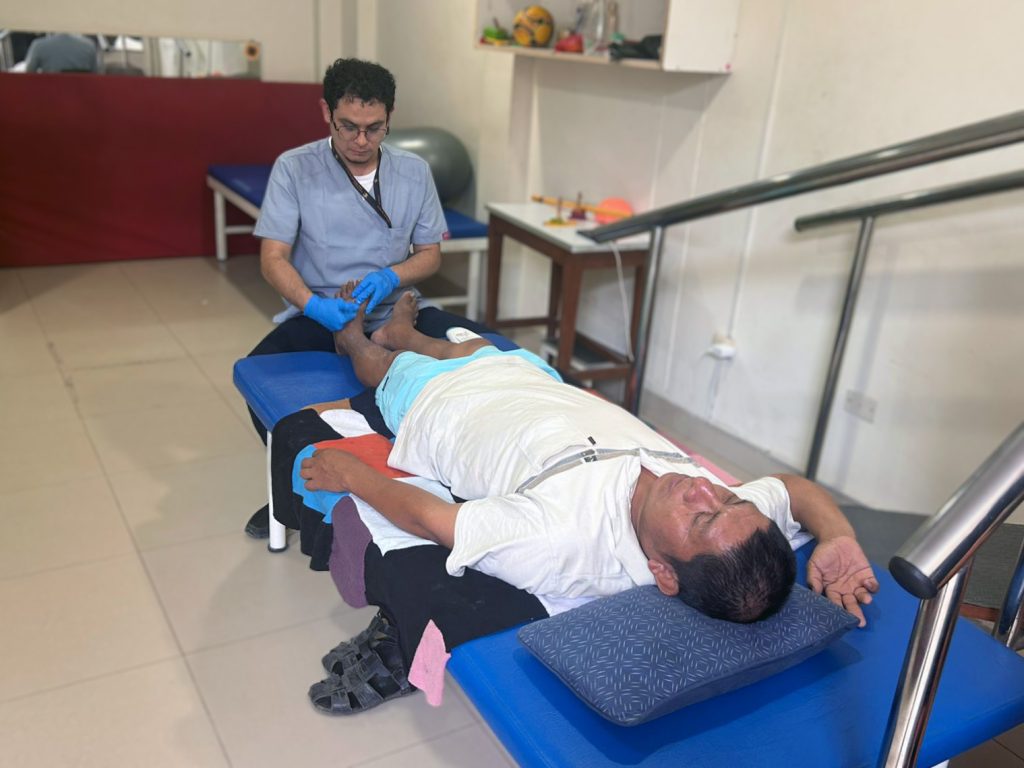
San Vicente Pastoral Center in Piura, Peru, provides an important support system for community members facing various life challenges.
Finding Humanity in Migration: My Experiences
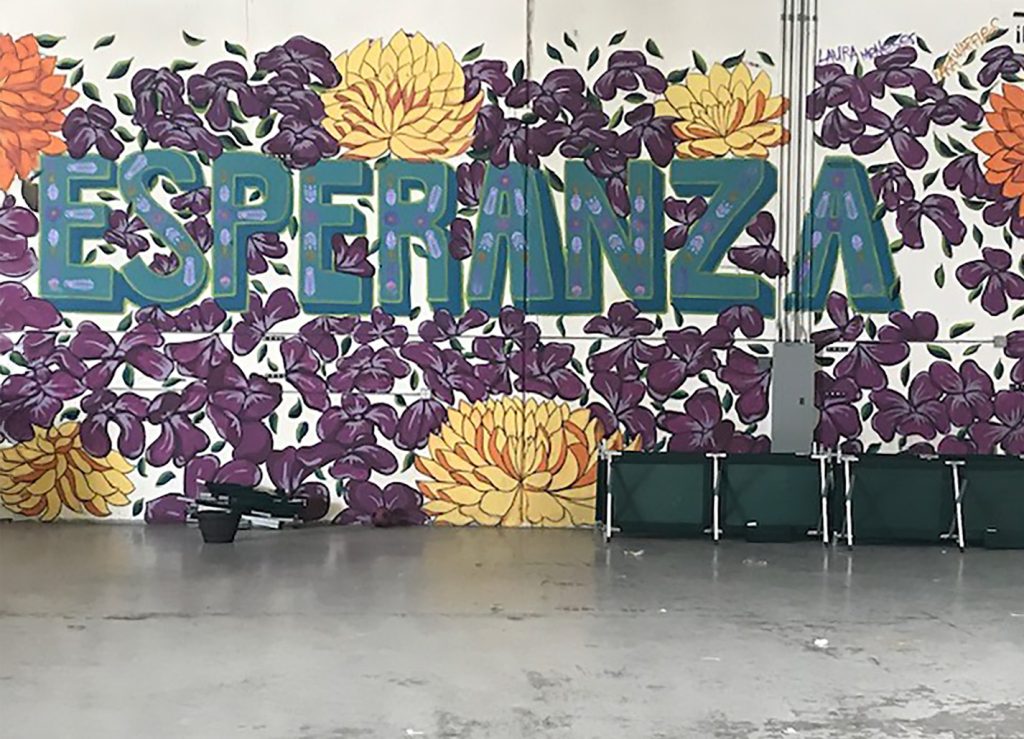
Each migrant has a story. Sister Sheila Karpan writes that she believes sharing these stories will help our citizens think differently about migrants.