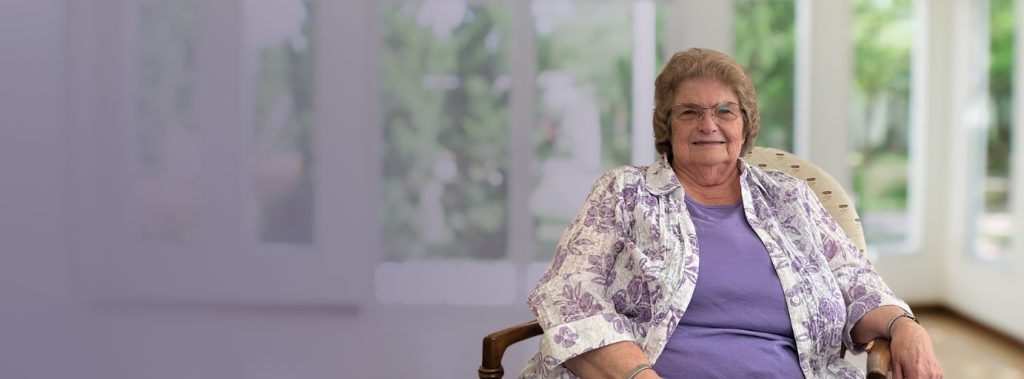
Sister Virginia Jakobe, SCL, believes her work is “a gift God gave me.” For decades, she has sat beside hospital beds in Livingston, Montana, ensuring that patients do not die alone. Sometimes she holds their hand. Sometimes she simply sits quietly. Her nursing background helps her explain what is happening to worried families when doctors and hospice workers cannot be there. In retirement, her ministry is spent accompanying people through their final hours.
Sister Virginia’s path to this calling began with loss and a dream deferred. She says, although she spent 20 years teaching school, “I’d always wanted to be a nurse.” When her mother died of cancer, the experience gave her the push to ask the SCL leadership for permission to change careers. She graduated from nursing school in November 1983 and found her way to Livingston, where she has lived and served the community for over 40 years.
The move to Livingston connected her nursing skills with end-of-life care in unexpected ways. While waiting to start nursing school, she had volunteered with hospice in Billings. When Livingston’s hospital began developing its hospice program, it needed evening shift nurses, and Sister Virginia was ready. As the only Catholic Sister in town, she quickly became known throughout the community.
Even before formal training, Sister Virginia found herself staying overtime to sit with dying patients. “I would stay overtime and sit with patients who were dying and help the families,” she explains. After the hospital built a new facility in 2015, she took classes in “No One Dies Alone,” which trains volunteers to ensure no patient dies without someone present. But by then, she had already been doing this work for years.
Her approach to accompaniment adapts to each person and situation. “I respect their religion and their practices,” she says. With patients, “if they want to sing or pray or talk, then we do that. If they’re unable or they don’t want to, I just sit quietly with them and I do the internal praying.” Her training taught her about different faith traditions so she can offer appropriate comfort.
Through years of this ministry, Sister Virginia has learned that dying follows no set pattern. “Everybody dies differently,” she emphasizes. “Everybody has their own way of going through the dying process.” She has observed that patients often control the timing of their death, sometimes waiting to die until family arrives or dying once loved ones leave the room.
Her own family experiences taught her about this timing. When her mother was dying, her father had been at her bedside for months but had stepped out of the room. When they called him back, “she was alive for just seconds and then she passed away.” These moments show her that “it’s their decision” when to let go.
Sister Virginia has also witnessed what she describes as spiritual struggle during dying. Some patients become restless and agitated as death approaches. She believes her presence during these moments can “help them know that there is somebody around them who cares for them.”
The emotional weight of this work requires intentional self-care. Sister Virginia takes “quiet time” to think about each experience. She asks herself, “could I do something better or not do something at all?” Prayer, country drives, and walks help her process what she has witnessed. This ministry has made her “a deeper religious person” with “a deeper prayer life.”
Her accompaniment work has changed how she sees daily interactions. She also ministers as a greeter at the hospital, where she has learned that small gestures matter greatly. “You never know what little thing you’re going to do to help somebody,” she reflects. When she simply says hello to someone, “the gratitude on their face comes back to me. So it works both ways.”
This insight shapes her approach to everyone she meets. “It’s just the little things rather than great big things that help,” she says. The work has made her “much more aware of the individuality of people” and taught her “not to judge others.”
Her greatest wish is that others would understand this individuality when it comes to death. Sister Virginia has observed that each death is unique. Her ministry gives the assurance that people do not have to die alone. Through her presence, Sister Virginia helps make the dying process less frightening for both patients and their families.
This article appeared in the 2025 Summer edition of Voices of Charity