What started as a simple waste-tracking system in an institutional kitchen has grown into something more ambitious. On the Sisters of Charity of Leavenworth campus, a composting pilot program diverts organic material from landfills every month while cutting expenses and reducing greenhouse gas emissions.
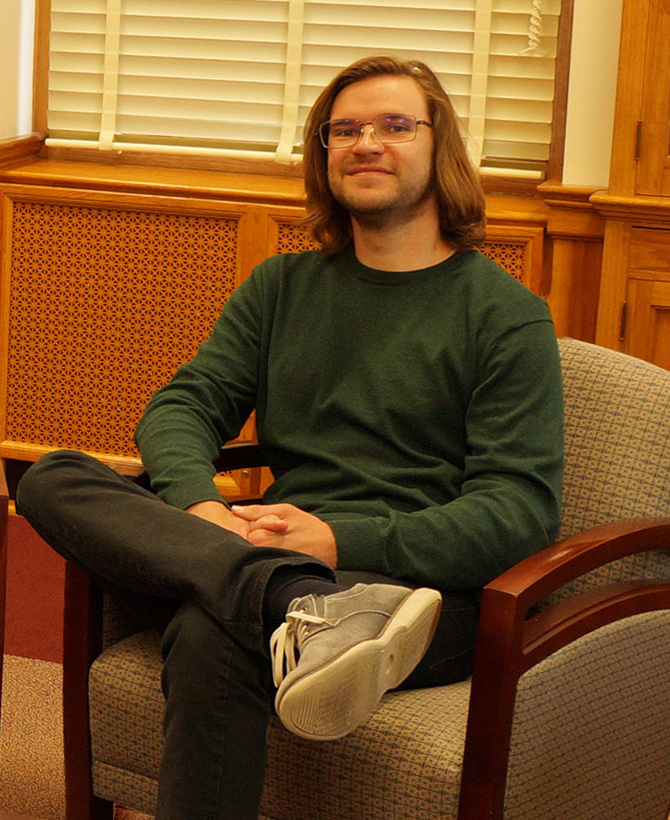
The transformation didn’t happen overnight. When Nick Keehler arrived at the Office of Justice, Peace, and Integrity of Creation (JPIC) two and a half years ago, he thought composting would be a straightforward, simple process. Meanwhile, Chef Maria Soto in the Morrison Food Service kitchen at USM was already tracking every pound of food waste, categorizing overproduced meals and vegetable scraps through a system designed to control costs.
What neither initially realized was how their separate efforts—environmental vision and financial stewardship—would converge into a comprehensive waste-to-resource program that may reshape the community’s approach to sustainability.
Tracking Scraps and Meal Donations

Soto explains that in the Morrison Food Services kitchen, her team’s waste-tracking system categorizes vegetables, leftover soup, and overproduced meals, all tracked through a machine called “Waste Not.” The tracking isn’t new, as Morrison has been monitoring food waste for years as part of its contract with the Sisters of Charity and the University of Saint Mary.
“If I waste 10 tons of food, it’s like the money for this company just walking out the door, out of control,” Soto explains. When corporate representatives review the data and see significant waste, “the corporation comes in and does an assessment of me. ‘Hey, you wasted like a thousand pounds last week. What’s going on?’”
The system separates materials into categories: vegetables and eggshells that can be composted, and items like bones that cannot be processed in their current system. But until recently, both categories ended up in the same place—the dumpster.
Morrison Food Service has long had a program for overproduced meals. Whenever this occurs, the excess meals are frozen and collected by Leavenworth Interfaith Community of Hope. The organization provides meals and other services for those in the city who are suffering from poverty.

Even though waste tracking and meal donations helped with cost and was good for the community, the environmental potential remained untapped. Keehler began working on a simple idea that would involve the collaboration of several people.
The Two-Year Learning Curve
“I, in my naivety coming in, saw that food items were going directly in the trash,” Keehler admits. “I thought, ‘Oh, it’s easy enough. I compost at home.’”
Easy it was not. The planning for this project stretched across two years of coordination, stakeholder management, and myth-busting. Keehler had to wait for leadership transitions at Morrison before approaching Soto about changing established kitchen routines. Meanwhile, Kenny Davidson, the SCL grounds coordinator, worked with facilities management to find a location that wouldn’t alarm the SCL or USM community members.
“If you start mentioning food waste, then people start thinking smells,” Keehler explains. However, when a compost pile is appropriately managed and frequently turned, the smell is kept to a minimum. Nevertheless, concerns about odors and wildlife meant finding a spot “far enough away from people that they wouldn’t have to know it existed.”
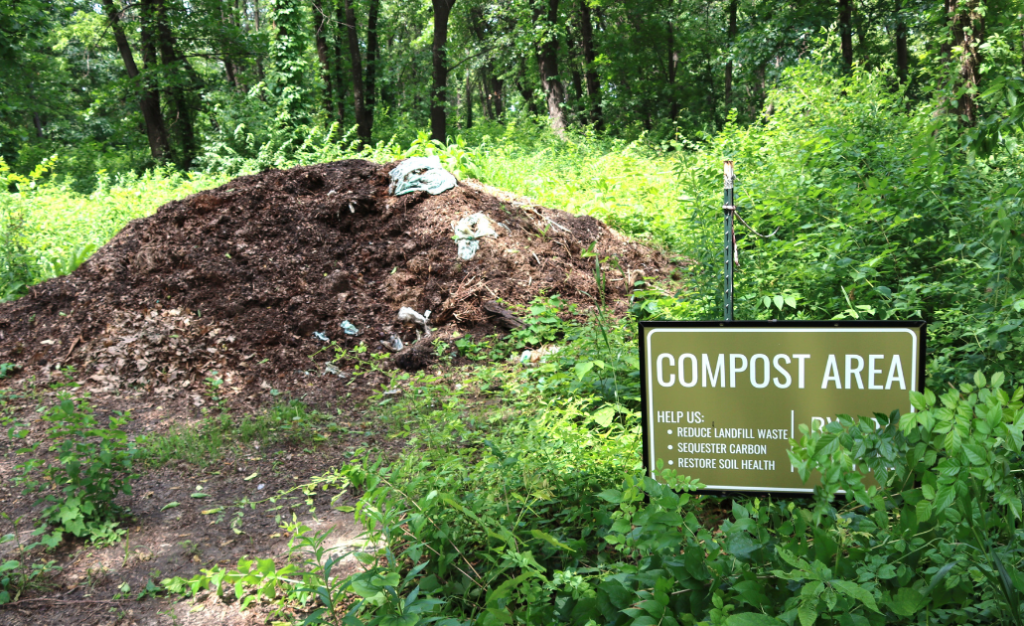
The location Davidson cleared sits behind a parking lot, up the hill from the softball field, away from student and resident areas, but accessible for his equipment. The current composting area measures approximately 20 feet by 20 feet and is about 5 feet high.
This trial phase is small—just vegetable scraps and fruit peels in 32-gallon compostable liners, transferred to 65-gallon bins on the loading dock before Davidson’s crew hauls them to the pile.
“We don’t want it to get to an unmanageable level if we’re not ready to turn that,” Keehler says. The next phase will add starches like bread and pasta, gradually scaling up as they master each component.
Beyond Composting
The program aligns with the SCL’s commitment to the Laudato Si’ Action Platform, addressing Pope Francis’ call to care for “the cry of the earth and the cry of the poor.” The finished compost takes a minimum of three years to make, with careful management, and could eventually support local agriculture and food security initiatives.
“When food waste decomposes in landfills under anaerobic conditions, it generates methane, a greenhouse gas that is 80 times more powerful in its first 20 years than CO2 as a greenhouse gas, but it is shorter-lived in the atmosphere,” Keehler said, citing a 2012 report from the United Nations. In an aerobic compost pile, those same materials break down without releasing methane into the atmosphere, keeping nutrients “sequestered in the soil.”
Because methane is shorter-lived in the atmosphere than CO2, the climate benefits of composting appear more quickly than other carbon reduction strategies. “We’re kind of running out of time to make changes,” Keehler notes.
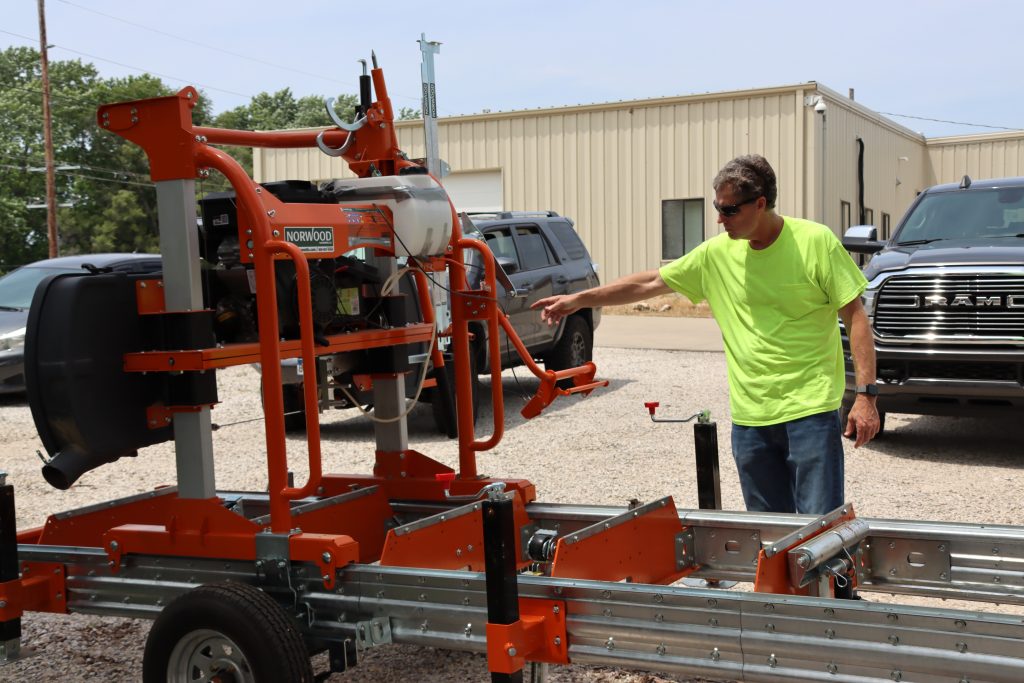
Davidson’s operation does more than just composting. The SCL Community recently invested in a wood planer for the grounds crew, which transforms trees that must be removed from the property into usable lumber. The lumber is planed, edge-sealed, and dried for future projects. The process generates substantial sawdust, which can be mixed into the compost. “We have resources that we think are trash that can be repurposed into good soil with good nutrients,” Keehler says.
Nothing Goes to Waste
The collaboration has the potential to transform waste management across the campus. Soto’s team now separates materials with composting in mind while continuing their precise tracking for cost control. Davidson provides equipment expertise and materials from his ongoing landscape maintenance.
“So we don’t waste anything,” Soto says with satisfaction. The program has created what she calls “big benefits for everybody”—cost savings for Morrison, environmental benefits for the SCL and USM communities, and potential resources for local agriculture.
Looking ahead, Keehler envisions expanding individual composting to serve the broader Leavenworth area. As he notes, “As far as I’m aware, there are no composting options in the Leavenworth community.” But the deliberate approach continues: “We are doing this slowly and intentionally incorporating all the stakeholders.”
In the cleared woodland space, the composting pilot program continues its slow progress from waste to resource. Meaningful change, however challenging to implement, is achievable through persistence and collaborative problem solving.
This article appeared in the Summer 2025 Edition of Voices of Charity.