Collaborating to Meet Essential Needs in Leavenworth
Food insecurity has long affected families in Leavenworth, but recent pressures, including the government shutdown and reductions to Supplemental Nutrition Assistance Program (SNAP) benefits, have made the situation more urgent. In response, the Integral Ecology Initiative (IEI) convened new and longtime partners to launch a community food drive.
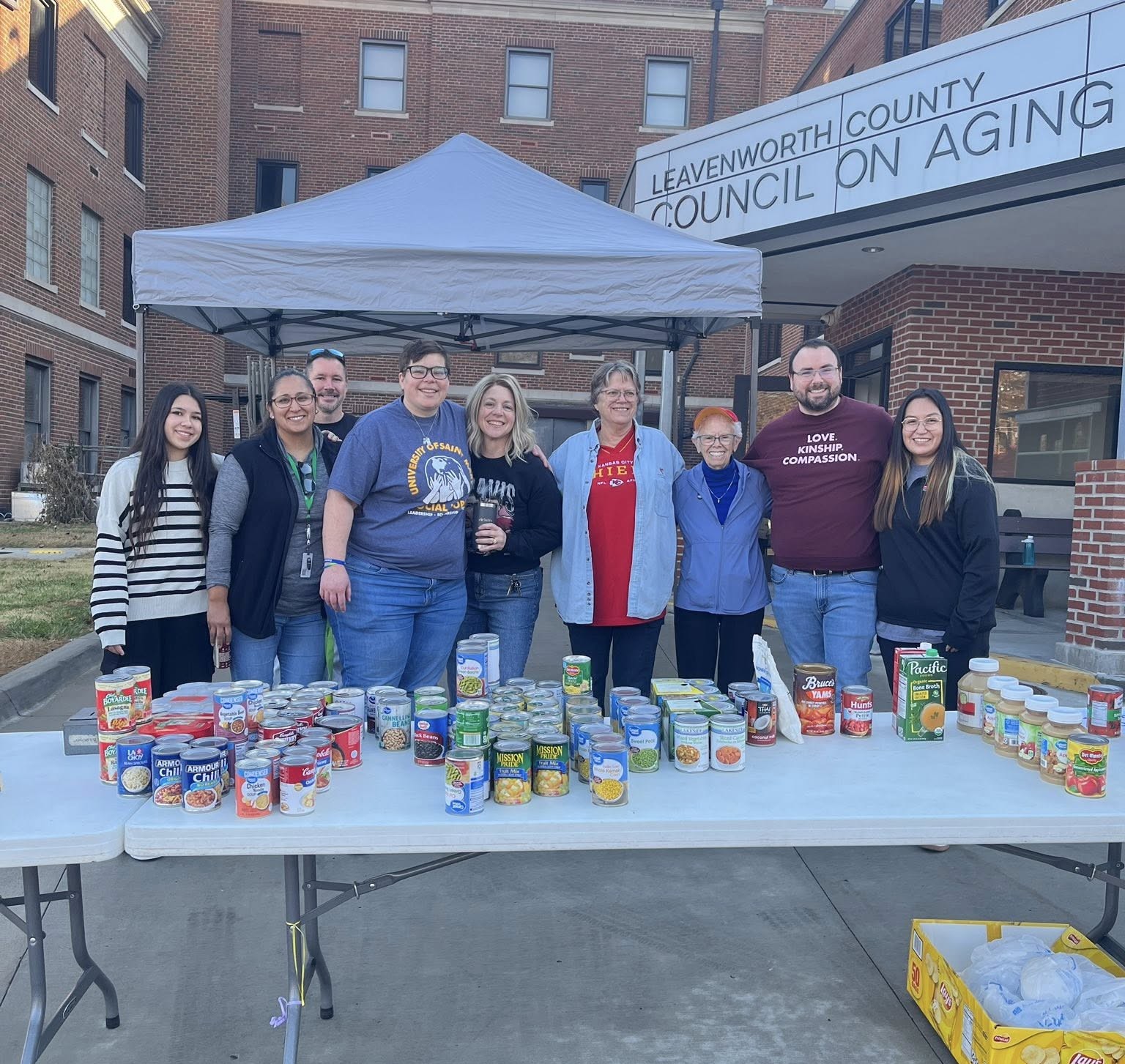
In just 14 days, a coalition including the Leavenworth Community Pantry Project, United Way of Leavenworth County, First Presbyterian Church, Leavenworth Backpack Buddies, and other community organizations coordinated a successful, community-wide effort.
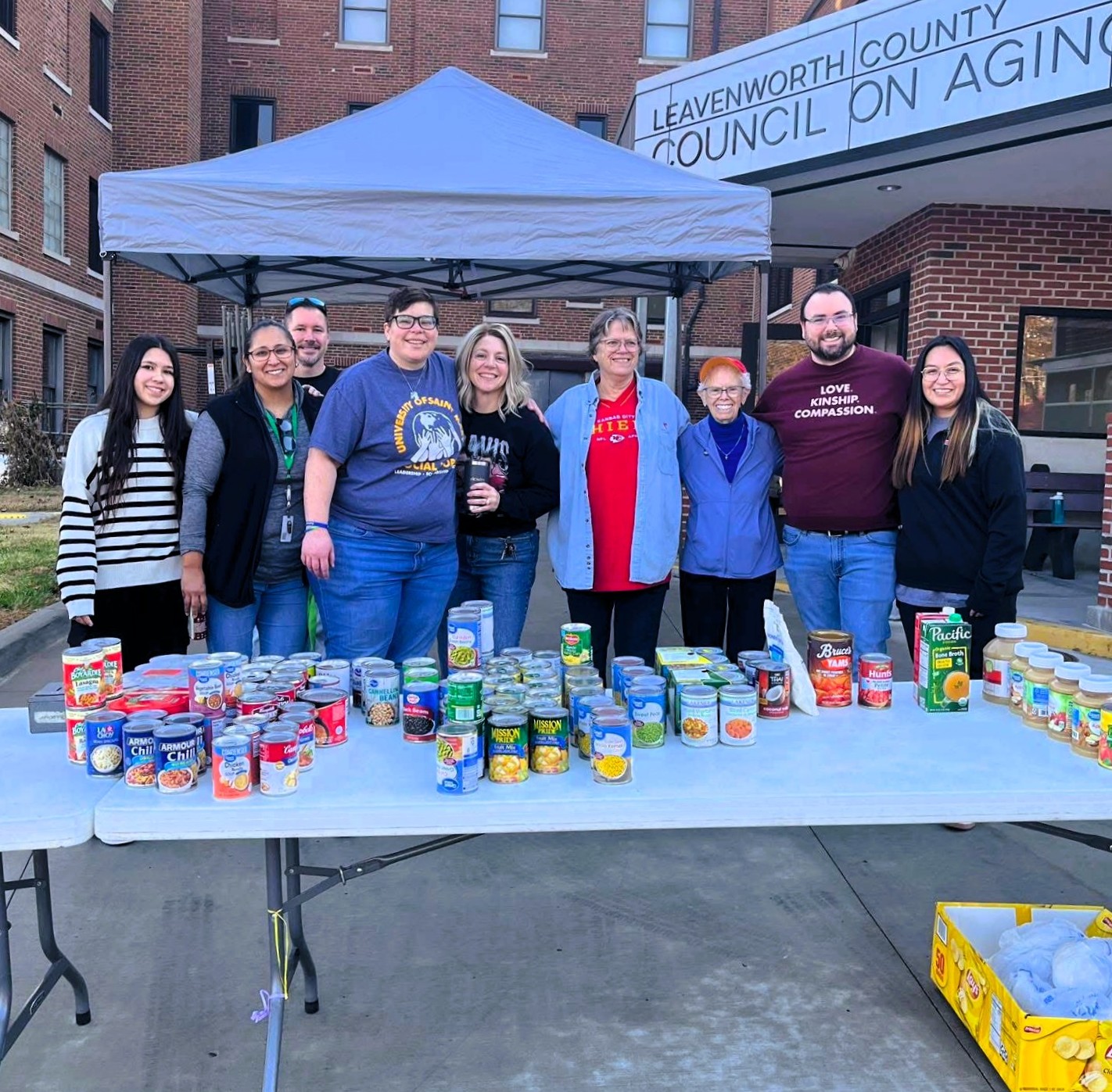
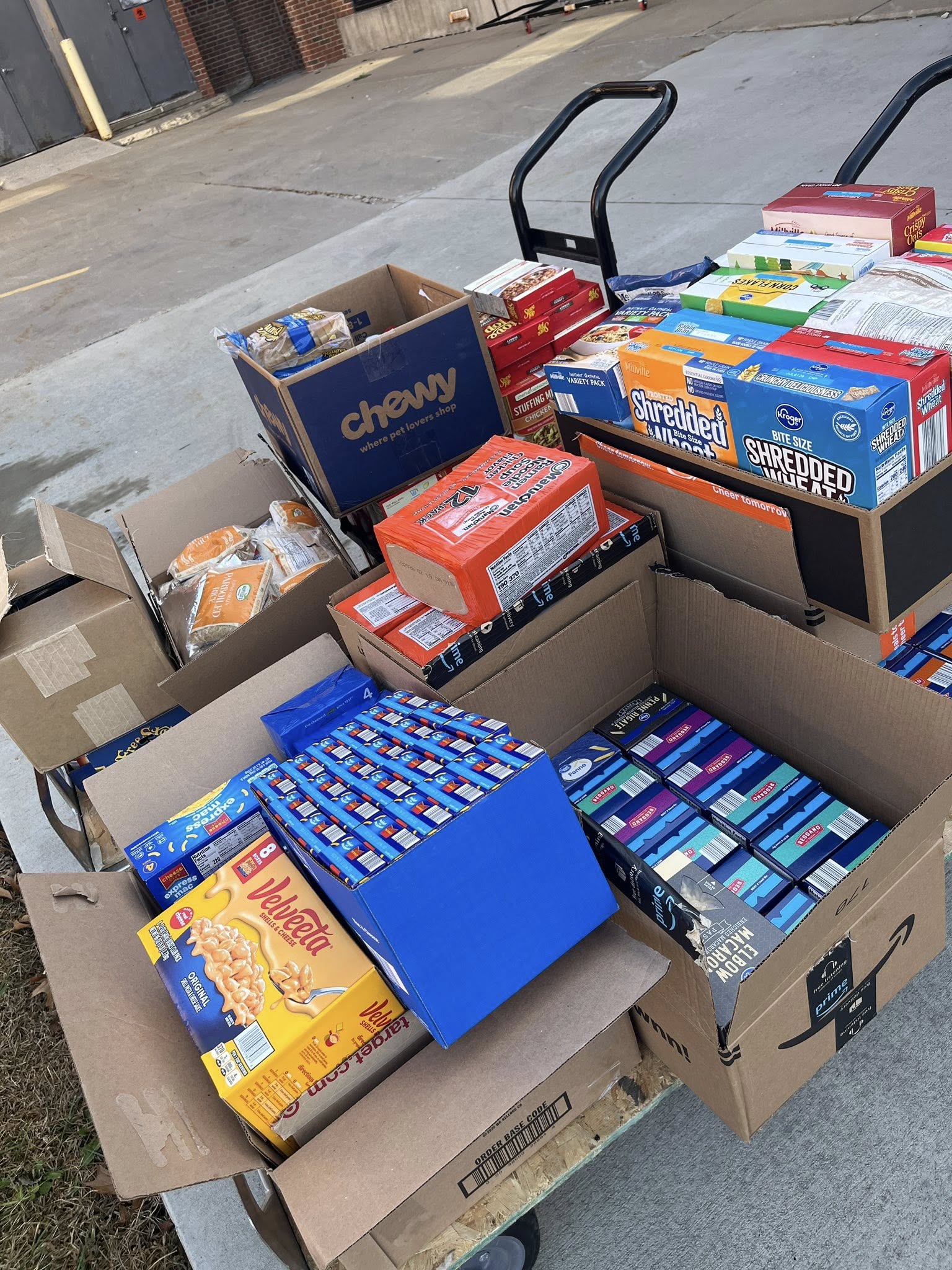
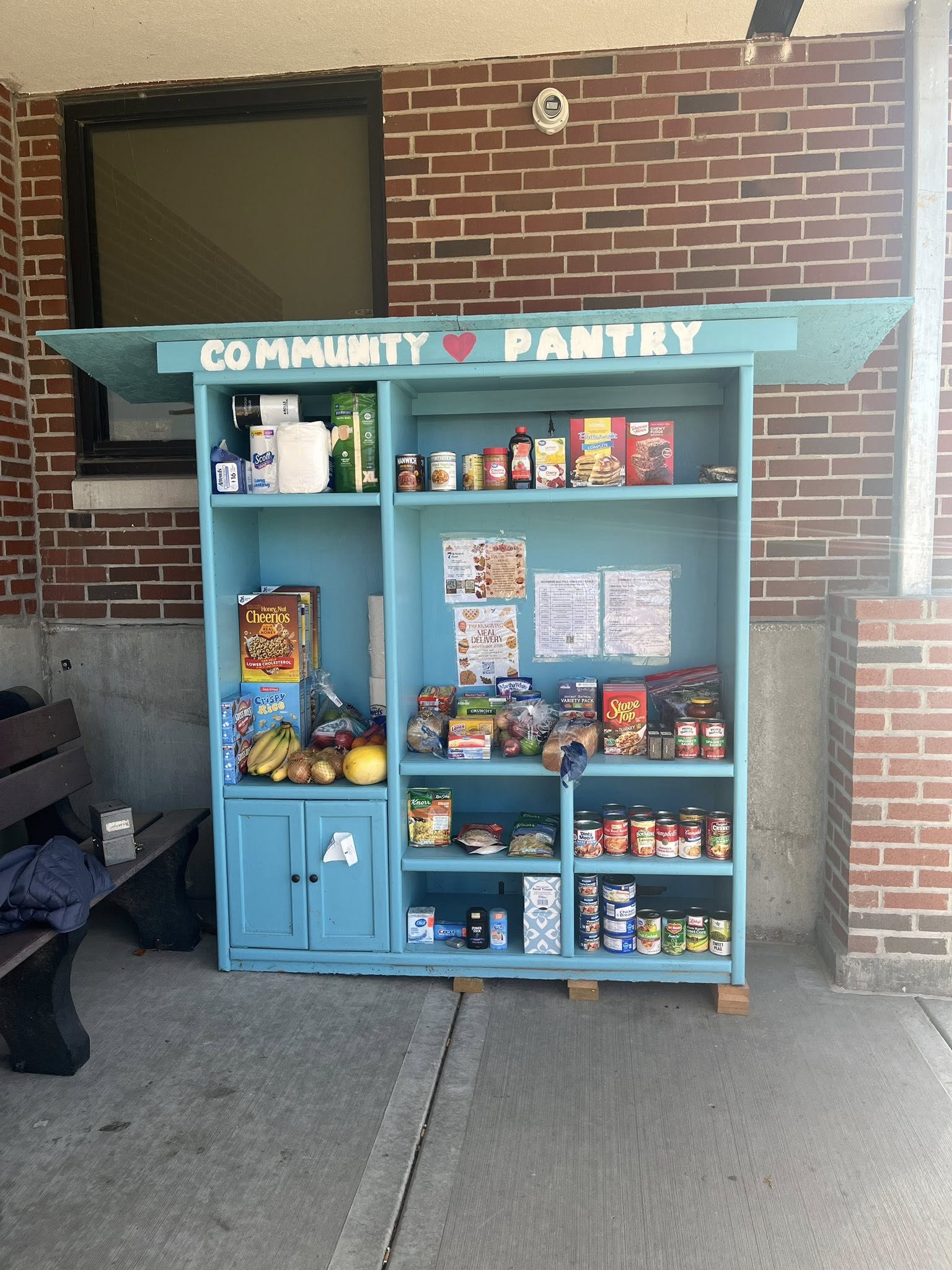
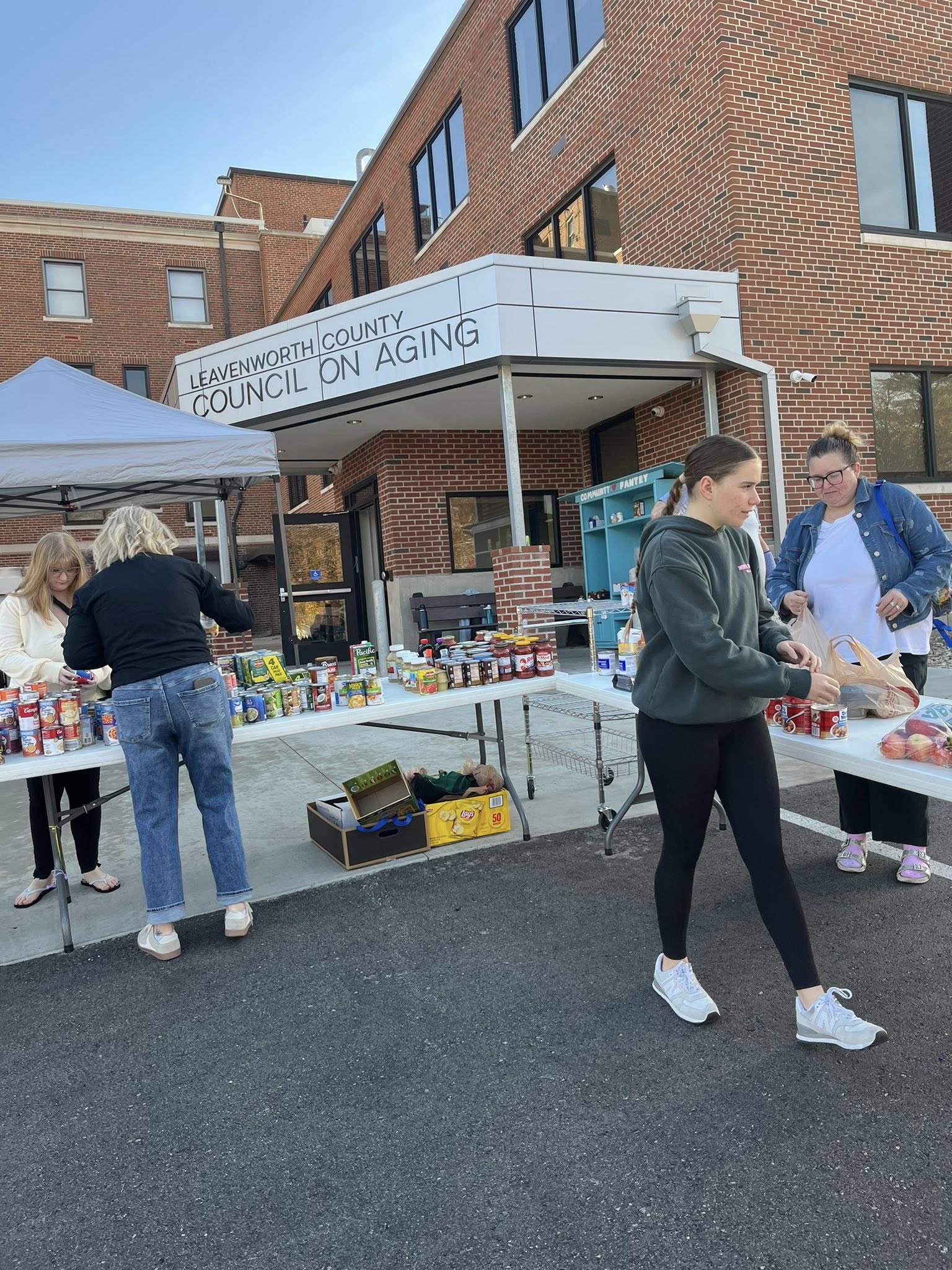
On Saturday, November 15, volunteers gathered at the Leavenworth County Council on Aging to receive donations from local residents. In just four hours, they filled 10 carts with nonperishable foods, fresh produce, and toiletries. More than 20 SCL Sisters, Associates, and staff contributed donations and volunteer hours, demonstrating the generosity and compassion at the heart of the SCL community and making the front page of the Leavenworth Times.
“We know that hunger doesn’t exist in isolation,” said John Shively, Executive Director of Mission. “When economic pressures rise, the most vulnerable families feel it first. This food drive shows what’s possible when our community comes together to meet urgent needs. It’s a powerful example of integral ecology in action.”
Donations will support several local organizations serving individuals and families experiencing food insecurity, including Catholic Charities of Northeast Kansas, Trinity Lutheran Church, Interfaith Community of Hope, the University of Saint Mary’s Spiro’s Cupboard, and Good Shepherd Pantry. The drive also raised more than $1,500 in cash gifts, which will be distributed directly to these groups to help address pressing needs.
While the one-day event provided immediate relief, coalition partners agreed that ongoing collaboration is critical to addressing the root causes of food insecurity. Through efforts like this, the IEI continues to build community partnerships and advance its mission to help all people thrive by meeting basic human needs.
Survey Insights Inform Sustainability Planning
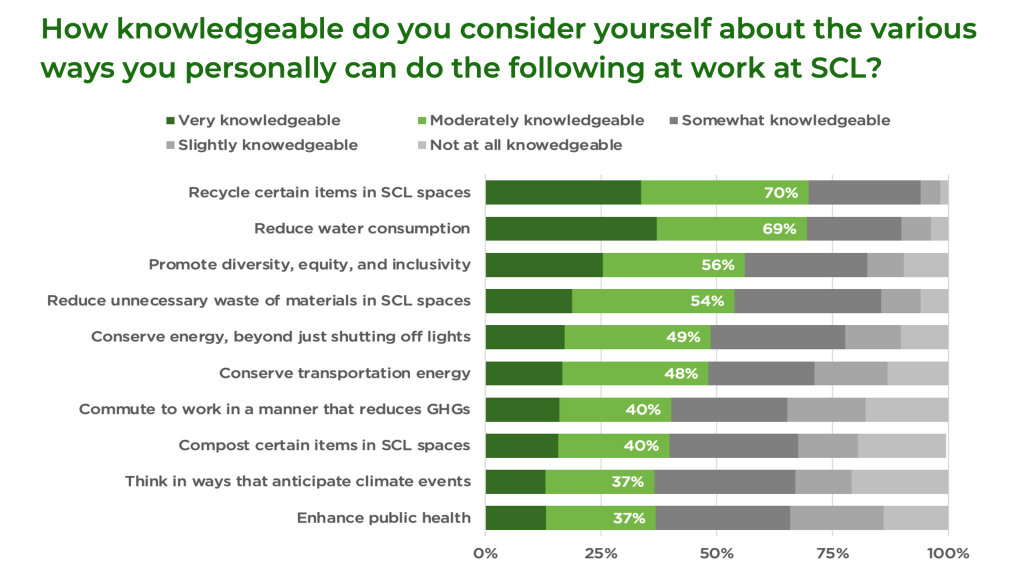
As part of the IEI’s sustainability and energy-efficiency planning, our partners at the Verdis Group recently completed a comprehensive community survey. Nearly half of the Sisters and staff participated in the Sustainability Engagement Survey, offering honest insights into current habits, levels of awareness, and opportunities for growth. These findings will help guide ongoing efforts to strengthen practices that reduce our environmental impact and help us achieve our goal of becoming carbon neutral by 2030.
The survey revealed what many of us experience firsthand: sustainability is both highly valued and deeply aligned with the SCL mission. Respondents overwhelmingly agreed that “operating in a way that produces more benefits than harm” is important and mission-aligned, with 94% affirming each statement. Participants also expressed a strong personal commitment to sustainable action, with more than three-quarters reporting that they consistently recycle and use reusable items, such as bottles and bags.
At the same time, the survey highlighted opportunities to increase education around lesser-known or more technical topics such as sustainable commuting, climate resilience planning, and ways to reduce single-occupancy vehicle use.
Building on insights from the survey, Verdis Group will conduct an on-site visit in January to lead workshops, hold listening sessions, and engage Sisters, Associates, and staff in deeper conversations about sustainability. The IEI is grateful to all who participated in the survey. By engaging in this process, our community is helping ensure that the work of caring for creation remains at the heart of all we do.

Expanding Knowledge About Climate Resilience Hubs
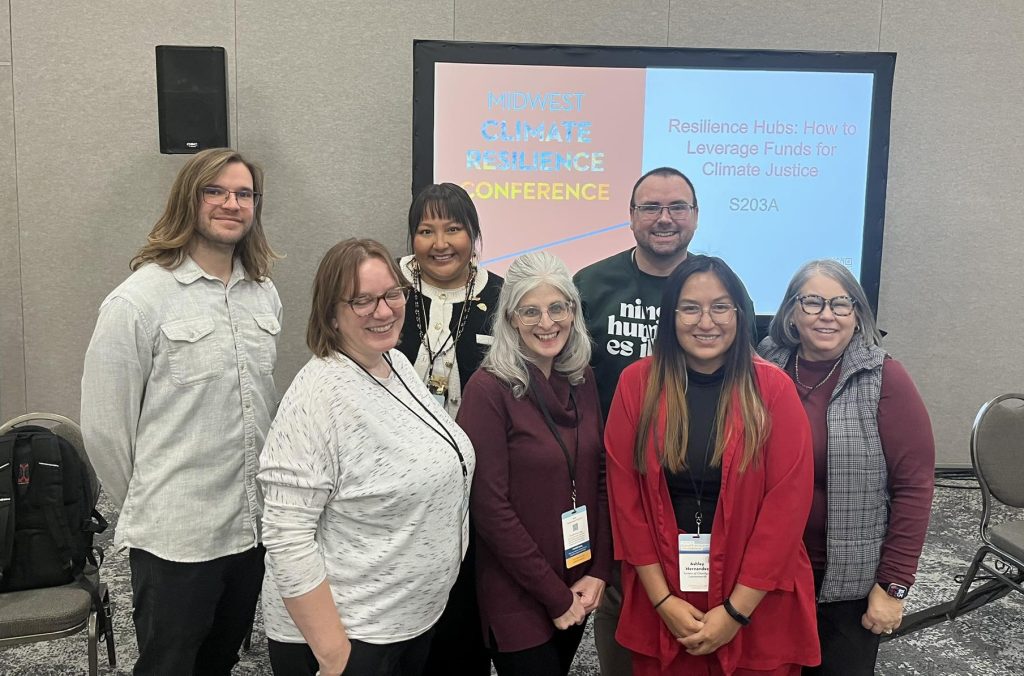
Earlier this month, members of the IEI and JPIC teams traveled to Milwaukee, WI, with partners from the Climate and Energy Project (CEP) to attend the Midwest Climate Resilience Conference—one of the region’s leading gatherings on climate adaptation, community resilience, and innovative solutions for a rapidly changing world.
This joint delegation reflects a growing partnership grounded in shared commitments: strengthening community resilience, expanding equitable access to resources, and addressing the environmental and social factors that shape quality of life—core pillars of integral ecology.
Over the summer, IEI, JPIC, and CEP began exploring the possibility of establishing a climate resilience hub in Leavenworth. Resilience hubs are trusted community spaces designed to help residents prepare for, respond to, and recover from disruptions. They address:
- Climate-related hazards and extreme weather
- Economic and social vulnerabilities
- Access to basic services and community preparedness
Hubs typically offer backup power, heating and cooling, communications, and charging stations during crises, as well as year-round services such as food support, health resources, and community programming.
As an initial step, CEP conducted a landscape analysis of Leavenworth. Their findings highlight significant challenges—especially in census tracts north of Three-Mile Creek:
- High energy burden: Vulnerable residents spend more than 9% of their income on utilities.
- Housing insecurity: Nearly 60% of renters are cost-burdened; over 38% of homes show substandard conditions.
- Limited food access: Reduced availability of healthy options in northern neighborhoods.
- Health inequities: Life expectancy drops to 66.1 years in the most disadvantaged tract, with high chronic disease rates and limited healthcare capacity.
- Environmental stressors: Air pollution ranks among Kansas’s worst; the area saw 32 extreme heat days in 2023.
These overlapping vulnerabilities strongly suggest that Leavenworth is a promising candidate for a resilience hub, where coordinated services could significantly strengthen community stability and well-being.
The Milwaukee conference provided the IEI–CEP team with an opportunity to deepen their understanding of resilience hubs, hear from national leaders, and explore models being used across the Midwest and Great Lakes regions. Participants represented every sector engaged in resilience work—from community organizers and researchers to city planners, engineers, policymakers, and faith-based groups.
Three major takeaways emerged from the conference:
1. Every Resilience Hub Is Unique to Its Community
No hub is the same. Some cities operate a single central site, while others create networks across churches, schools, libraries, or nonprofits. Successful hubs are co-designed with residents and tailored to local needs—from food access to cooling to workforce support.
2. Hubs Are Essential in Times of Social, Economic, and Climate Uncertainty
Hubs help communities navigate multiple crises—from extreme heat and power outages to rising utility costs, workforce instability, and even federal shutdowns. They provide immediate assistance while strengthening long-term resilience and independence.
3. Collaboration Is the Cornerstone of Resilience
Resilience hubs require deep partnership among nonprofits, local government, faith communities, service providers, and residents. This aligns closely with the IEI’s model of shared ownership, community empowerment, and collaborative action.
The emerging IEI–CEP partnership positions the Sisters of Charity and their partners to explore new approaches at the intersection of environmental stewardship and basic human needs—two inseparable components of integral ecology.
ACT WITH US FOR PEOPLE AND THE PLANET
After hearing results from the Sustainability Engagement Survey, we invite you to reflect on your own experiences. What are small things I can do each day to better care for creation?